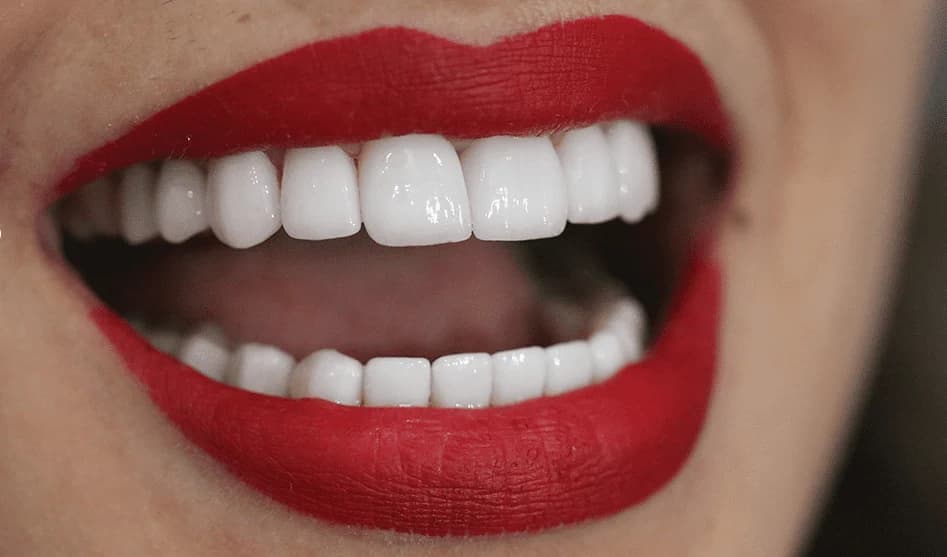
Zirconia and E-Max (lithium disilicate ceramic) are the two crown materials most often compared in aesthetic dentistry. Both offer metal-free full-ceramic restorations; they do not carry grey reflection risk at the gum line and are building blocks of modern smile design. There is no single answer to "which is better?" — the right answer depends on the tooth's position in the mouth, bite force, gum thickness and your aesthetic expectations.
In this guide we compare zirconia and E-Max in structural features, durability, aesthetic performance, tooth preparation, combined protocols and long-term care. Our aim is not to declare one material the "winner" but to help you understand which criteria matter in your own case.
Comparison Table
| Feature | Zirconia | E-Max |
|---|---|---|
| Material type | Zirconium dioxide ceramic | Lithium disilicate glass ceramic |
| Durability | High–very high | Medium–high |
| Translucency (naturalness) | Good (improved with multilayer) | Very good |
| Front tooth aesthetics | Good | Excellent |
| Posterior bite force | Very suitable | Case-dependent |
| Minimum thickness | Slightly more | Can be applied thinner |
| Tooth reduction | Standard | Minimal/no-prep possible |
| Bruxism suitability | Generally more suitable | Careful planning needed |
| Long bridge suitability | More often preferred | For limited span |
| Gum compatibility | Good | Good |
| CAD/CAM production | Yes | Yes |
The table offers a general framework. Your individual plan becomes clear after digital scanning, bite analysis and facial proportion assessment.
What Is a Zirconia Crown?
A zirconia crown is a full-ceramic restoration made from high-strength zirconium dioxide (ZrO₂) ceramic. Although structurally different from natural enamel, it is one of the most widely used metal-free crown and bridge materials in modern dentistry. Production usually goes through CAD/CAM milling after intraoral scanner or digital impression, followed by high-temperature sintering (firing).
Zirconia's most distinctive feature is high fracture resistance. This structural strength makes it a reliable choice in posterior teeth — premolar and molar region. Zirconia is often preferred especially in patients with bruxism (teeth grinding) risk, in high chewing force zones and in long-span bridges.
Two main zirconia types are used today: monolithic zirconia (single colour, high durability) and multilayer zirconia (more natural appearance with different opacity and translucency layers). Monolithic systems excel in durability; multilayer systems offer marked aesthetic improvement over monolithic zirconia and can be considered in the anterior region too.
For treatment details, process and FAQs see our zirconia crowns page. To understand when zirconia may not be suitable see who is not suitable for zirconia crowns.
What Is an E-Max Crown?
E-Max is a glass ceramic based on lithium disilicate (Li₂Si₂O₅), developed by Ivoclar Vivadent. The name "E-Max" comes from "Esthetic Maximum" — reflecting a material positioned with aesthetic performance in the foreground. Production can use pressing or CAD/CAM milling; in both methods the natural translucency of glass ceramic is preserved.
E-Max's strongest point is light transmission. Natural enamel partly transmits and partly reflects light; this gives teeth a "living" appearance. E-Max generally mimics this translucency behaviour more successfully than zirconia. Especially on front teeth, along the smile line and in thin-gum areas, this difference directly affects aesthetic outcome.
E-Max can be applied as full crown or laminate (thin porcelain layer). Ability to be applied thinly enables minimal-prep or no-prep laminate options; this contributes to preserving tooth structure. Find process details on our E-Max crowns page.
What Difference Does Material Structure Make?
Zirconia is made from zirconium dioxide ceramic and has extremely high fracture resistance; this structural strength makes it a reliable choice in the posterior region. Crystal structure can offer a more "opaque" profile; therefore old monolithic zirconia systems were sometimes criticised for a "white and flat" look. Multilayer technology has largely removed this limitation.
E-Max is glass-ceramic based; it reflects and transmits light very close to natural enamel. This gives an appearance hard to distinguish from the real tooth, especially on anterior teeth. Glass ceramic structure offers somewhat more aesthetic flexibility than zirconia; however, at the same thickness raw durability generally falls behind zirconia.
This structural difference directly affects clinical decision: if durability is priority, zirconia stands out; if translucency and aesthetics are priority, E-Max leads. Combined protocols using both in the same mouth arise from exactly this difference.
Durability and Fracture Resistance
In durability comparison zirconia generally comes first. Flexural strength values are higher in zirconia than E-Max; this matters especially in these scenarios:
- Posterior teeth (premolars and molars): Chewing force is much higher than in the front zone. Material must withstand this force long term.
- Bruxism: Clenching and grinding add load to restorations. For more on bruxism see this article; night guard use is recommended for both materials.
- Long bridges: As span (gap) lengthens in bridges covering multiple missing teeth, flexion forces increase; zirconia is more often preferred in these scenarios.
- Thin tooth structure: After root canal treatment or teeth supported by large fillings, remaining tooth tissue may be limited; choosing a durable material supports long-term success.
E-Max durability is in the "medium–high" category and is sufficient for daily use in the anterior region. Single front tooth crowns, small-span bridges and aesthetic-priority cases have used E-Max safely for decades of clinical history. However, with bruxism, parafunction (pen biting, clenching) or very long bridges your dentist may direct you toward zirconia.
Important note: Durability depends not only on material. Quality of tooth preparation, correct bite relationship, strength of prosthesis bonding and patient hygiene affect long-term success at least as much as material choice.
Aesthetics and Translucency
In aesthetic comparison E-Max generally leads. Translucency — how much light passes through the material — is one of the most critical components of natural tooth appearance. In patients with thin gums, along the smile line and in the anterior zone this feature is noticeably different.
E-Max's glass ceramic structure offers enamel-like light behaviour. Light passing through the gum line disperses inside the material and adds depth to the tooth. This "living" look is especially noticeable in photos and videos and under natural light.
Aesthetics in zirconia have advanced greatly in recent years. Multilayer systems with different opacity layers have largely eliminated the "flat white" look of monolithic zirconia. More opaque layers in the gingival (gum) zone and more translucent layers at the incisal (biting) edge create a natural transition. Still, at the highest aesthetic expectation — for example single front tooth restoration or upper anterior zone in a Hollywood Smile plan — E-Max may still be many dentists' first choice.
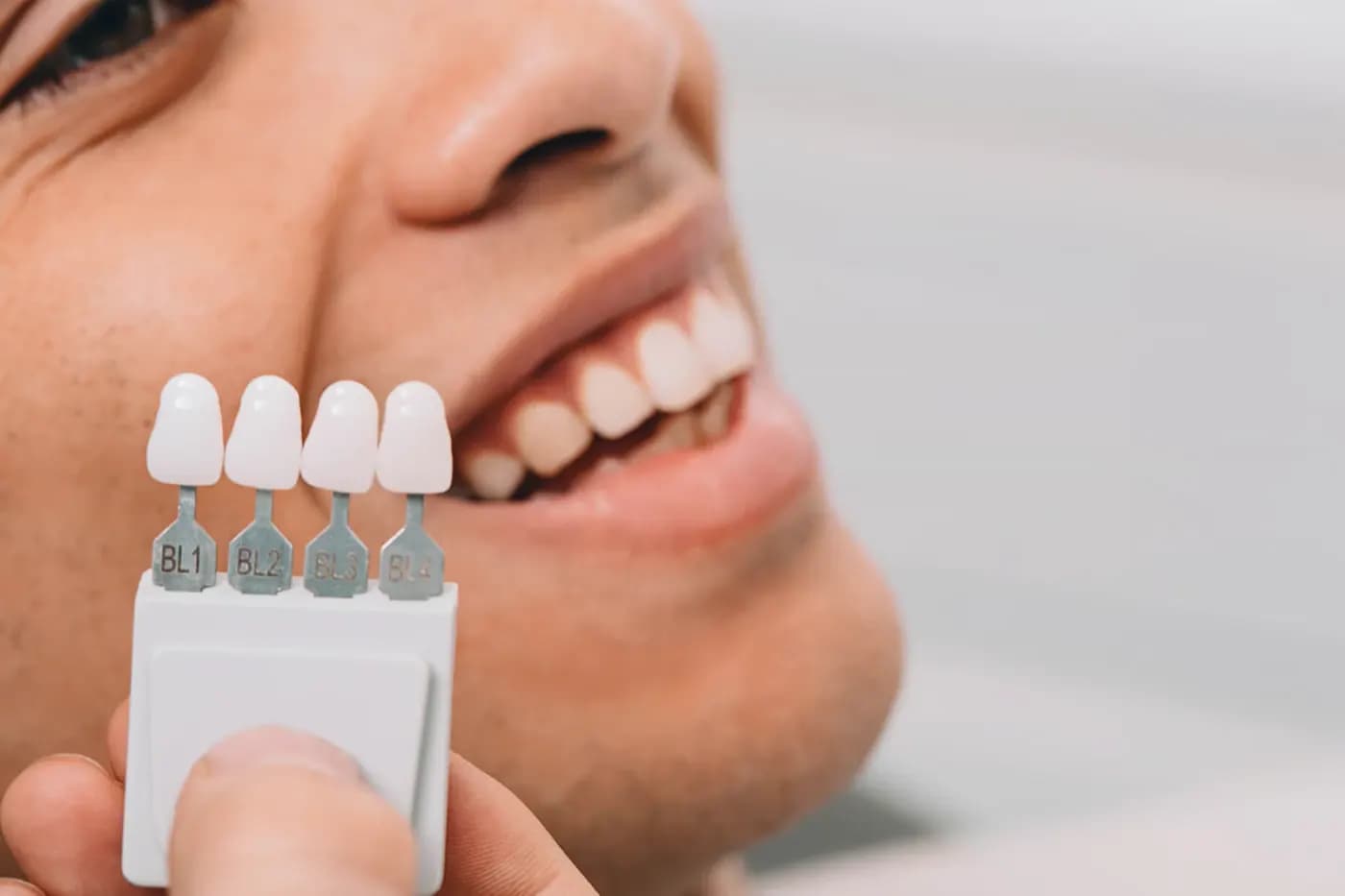
Colour harmony is also part of aesthetic planning. Both materials offer wide colour scales; digital shade matching aims for harmony with natural teeth. In combined protocols (E-Max front + zirconia back) it is critical that the laboratory produces both materials in the same colour system; this is determined in the planning stage.
Tooth Preparation and Minimal Reduction
In tooth preparation E-Max generally offers a less invasive option. Minimum thickness requirements may be lower than zirconia; this allows less tooth tissue to be cut.
E-Max minimal preparation: In some cases E-Max applied as laminate (leaf porcelain) can preserve most of the tooth with no-prep or minimal-prep protocols. This approach is evaluated especially in patients wanting mild colour correction, small shape change or minor gap closure. For basics before getting crowns see this guide.
Zirconia standard preparation: Durability usually requires somewhat more thickness. In standard crown preparation a certain amount of material is removed from the entire surface; exact amount varies with current tooth condition, bite relationship and restoration type (monolithic vs multilayer). After root canal treatment or serious structure loss standard preparation may be needed for both materials.
Digital scanning technology helps optimise preparation amount. Impressions taken with intraoral scanner are analysed in CAD software in the laboratory; minimum required thickness is calculated and unnecessary tooth loss is reduced.
Which Is Preferred in Which Situation?
E-Max stands out
- Front teeth and smile line: If maximum aesthetics is targeted in upper front 6–8 teeth, E-Max is usually the first option.
- Thin gums: When gum thickness is low, translucency becomes critical; E-Max is advantageous in this scenario.
- Minimal preparation preference: If preserving tooth structure is priority, laminate or thin crown can be planned with E-Max.
- Single tooth restoration: In single missing or damaged front tooth, E-Max offers aesthetic and durability balance.
- Hollywood Smile upper anterior: The most visible zone in smile design is upper front teeth; E-Max is often used here.
Zirconia stands out
- Posterior teeth (premolars and molars): Due to high chewing force, zirconia is a reliable choice in the back zone.
- Bruxism and parafunction: With clenching, grinding or pen-biting habits, durability takes priority.
- Long bridges: As span lengthens in bridges covering multiple gaps, zirconia is more often recommended.
- Lower jaw anterior: Compared to upper jaw aesthetic priority may be lower; zirconia also gives satisfying results on lower front teeth.
- Implant-supported crown: In implant-supported restorations, especially in the posterior zone, zirconia is often evaluated.
Both may be suitable
- In medium-span bridges, premolar zone and cases needing aesthetic–durability balance, your dentist may evaluate both materials. Digital simulation and mock-up (temporary trial) support this decision.
Combined Protocols: The Most Balanced Approach
In Hollywood Smile plans, using E-Max in the upper anterior zone and zirconia in the lower or posterior zone is common. This approach preserves maximum naturalness in front while providing long-lasting durability in back — in many cases the most balanced result comes from this combined approach.
The logic of combined protocol is simple: each tooth zone has different functional and aesthetic requirements. Upper front teeth are on the smile line so highest translucency and naturalness is expected; posterior teeth are exposed to chewing force so durability takes priority. Using two different materials in the same mouth is normal and widespread clinical practice.
In combined plans colour harmony, bite analysis and premolar transition zone are evaluated together in planning. In our articles What is Hollywood Smile and price factors you can find more detail on smile design process.
Treatment Process and Timeline
Zirconia and E-Max crown processes are largely similar; material difference appears more in the laboratory stage.
Typical flow:
- Initial examination and planning: Intraoral examination, radiography or CBCT assessment, aesthetic analysis and material choice. Result can be simulated with digital mock-up.
- Tooth preparation: Preparation suited to chosen material; digital scan or impression taken.
- Temporary prosthesis: Temporary crowns or laminates placed during laboratory time; aesthetics and function preserved.
- Laboratory production: CAD/CAM milling or pressing; sintering for zirconia, crystallisation firing for E-Max.
- Try-in and cementation: Permanent cementation after colour, fit and bite check.
For local patients the process usually completes within 1–2 weeks. For international patients see travel planning details in How many days does Hollywood Smile take in Turkey.
Long-Term Care and Lifespan
Both materials can be used for many years with appropriate planning and care; literature reports success rates of 10 years and beyond, but these are average figures. Regular hygiene, six-month check-ups, night guard if bruxism is present and avoiding biting hard objects extend lifespan. Uncontrolled bruxism, poor hygiene or trauma can increase revision need in both materials.
Cost Comparison
Zirconia and E-Max are in the premium full-ceramic category compared to metal-supported porcelain (PFM). Price difference between the two is small or similar at most clinics; factors determining total cost:
- Number of teeth treated
- Combined protocol (different materials used together)
- Temporary prosthesis need
- Additional treatments (root canal, gum contouring, implant)
- Laboratory quality and digital workflow
Dental treatment costs in Turkey may be more accessible than in many European countries; however, material quality and dentist experience are directly related to price. We covered this topic in detail in Why is dental treatment affordable in Turkey. Request a written treatment plan after examination for exact price.
Conclusion
Choosing between zirconia and E-Max is a planning process that reflects personal expectations beyond a technical decision. For patients wanting maximum aesthetics in front and maximum durability in back, combined protocol is often the ideal solution. In cases requiring single material choice, tooth position, bite force and aesthetic priority are decisive.
Material choice should be made after digital scanning, bite analysis and facial proportion assessment. Seeing the result in advance in mock-up and temporary prosthesis stages helps clarify your expectations. You can build your personal plan with free consultation and review example results in our before and after gallery.