

Dental Veneers & Crowns
Premium seramik · CAD/CAM üretim
E-Max / Empress Veneers
Glass-ceramic E-Max/Empress veneers reflect light almost exactly like natural enamel, making them a favourite choice for front-tooth aesthetics.
- Material
- Zirconia / E-Max
- Duration
- 4-6 days (completed in 2 clinic visits)
- Anesthesia
- Local anaesthesia
- Recovery
- 1-4 days of mild sensitivity
What Is It?
E-Max and Empress veneers belong to the lithium disilicate and leucite-based glass-ceramic family of materials — fully metal-free restorations. Although developed by Swiss manufacturer Ivoclar Vivadent at different points in time, both systems share the same underlying philosophy: to reflect light in a way that closely mimics natural tooth enamel, offering a translucent structure that produces a striking yet genuinely natural-looking result. This is exactly why these materials are so popular for restoring front teeth, where a soft, lifelike appearance matters most.
Unlike traditional porcelain-fused-to-metal crowns, E-Max and Empress veneers have no metal substructure, so there is no risk of the greyish line that can appear at the gumline over time. This makes them a particularly attractive choice for patients with a visible gumline or a smile line that draws attention to the front teeth. As light passes through the ceramic structure, it partially reflects and partially transmits, just as it does with natural enamel; this optical property is known as "translucency" and is the single most distinguishing aesthetic advantage of E-Max/Empress veneers. This is why dentists frequently choose these materials for the upper four-to-six front teeth, the area that draws the most attention in any smile.
Advances in CAD/CAM (computer-aided design and manufacturing) technology now allow these ceramic blocks to be milled with millimetre-level precision, producing veneers with excellent marginal fit, natural colour gradation and a lifelike surface texture. These materials can be manufactured not only as classic crowns, but also as thin laminate veneers, inlay/onlay restorations, or monolithic (single-piece) crowns, giving dentists the flexibility to tailor solutions to each case. For example, when a large old filling in a back tooth needs replacing, an E-Max onlay may be chosen instead of a full crown, helping to preserve more of the natural tooth structure.
At our clinic in Alanya, this treatment is planned together with digital smile design, aiming for a result that is both aesthetically pleasing and functionally sound. Many of our international patients, who travel to Alanya primarily for a holiday, take the opportunity to renew their smile at the same time, making a lasting aesthetic investment at a cost comparable to their holiday budget. Patients from the United Kingdom, Germany, the Netherlands and the Nordic countries in particular gain significant time and cost advantages by completing in a single trip to Alanya a treatment that could take months to arrange back home.
One question we hear frequently is how E-Max/Empress compares to zirconia or metal-supported porcelain. In short: zirconia offers greater mechanical strength, while E-Max/Empress has the edge in aesthetics. Metal-supported porcelain crowns are more affordable but, due to their metal substructure, cannot match the light transmission and gum compatibility of E-Max/Empress. As a result, dentists often favour E-Max/Empress for the front teeth that dominate the smile line, and zirconia for the back teeth or cases with heavy bite forces. Mixed cases — E-Max at the front, zirconia at the back — are also common and offer a balanced combination of aesthetics and strength.
Who Is It Suitable For?
E-Max/Empress veneers may be a suitable option in the following situations:
For patients with strong chewing habits, advanced bruxism, or the need for an extensive bridge, a more fracture-resistant material such as zirconia may be more appropriate. Similarly, in cases with significant loss of tooth structure (large cavities, fractures), a different substructure approach may be needed to reinforce the remaining tooth; here the dentist may recommend zirconia instead of lithium disilicate, depending on how much sound tissue remains.
During your assessment, your dentist evaluates not only your teeth but also your jaw joints, bite relationship and overall oral health. Patients with active gum disease or untreated cavities need to resolve these issues before proceeding with E-Max/Empress veneers. The final material choice is confirmed after a clinical examination, X-rays and a bite analysis; this content does not constitute a treatment guarantee and is intended for general information purposes.
Regarding age, E-Max/Empress veneers are generally applied to adult patients whose dental development is complete. In younger patients, gum levels and tooth dimensions may not yet be stable, so the dentist may recommend delaying treatment. Middle-aged and older patients more frequently present with gum recession, wear, and the need to replace old restorations — making this group the one that benefits most from E-Max/Empress veneers. Elective cosmetic dental treatments are generally advised to be postponed until after pregnancy; this is also discussed during your initial consultation.
- Discolouration, shape or size mismatch in the front teeth where a natural-looking solution is desired,
- Replacement of old composite fillings or crowns whose colour no longer matches surrounding teeth,
- Cosmetic closure of mild spacing issues such as diastema (gaps between teeth),
- Patients with a thin or translucent gumline, where a metal-supported crown could pose an aesthetic risk,
- Patients wishing to restore a single, discoloured front tooth following root canal treatment,
- Patients with sufficient healthy enamel and gum tissue, without a significant history of bruxism (teeth grinding),
- Patients with a history of metal allergy or sensitivity, seeking a fully biocompatible material.
Natural Look with E-Max
“E-Max glass-ceramic offers the closest translucency to natural enamel — especially in the anterior zone where it matters most.”
Who Is E-Max Ideal For (Anterior)?
Anterior aesthetics
Patients wanting maximum naturalness in the visible zone.
Colour irregularity
Masking fluorosis or intrinsic staining.
Chipped / worn front teeth
Conservative restoration of shape and shade.
Technologies Used
Digital smile design software is used to simulate the expected appearance of your veneers before they are placed, allowing you to preview the likely outcome before committing to treatment. Intraoral scanners provide more comfortable and precise digital impressions compared to traditional impression materials — a particularly welcome benefit for patients with a sensitive gag reflex.
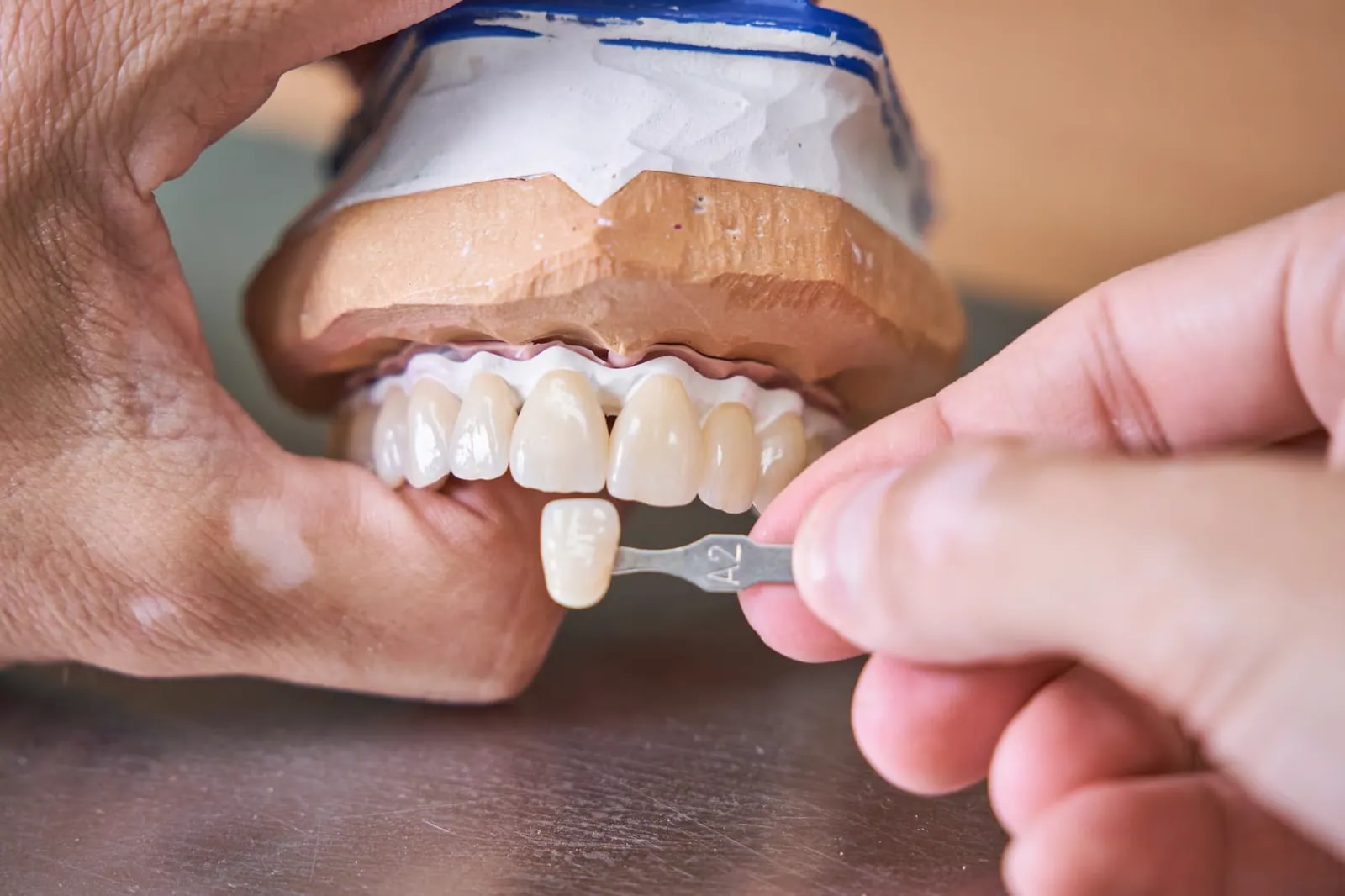
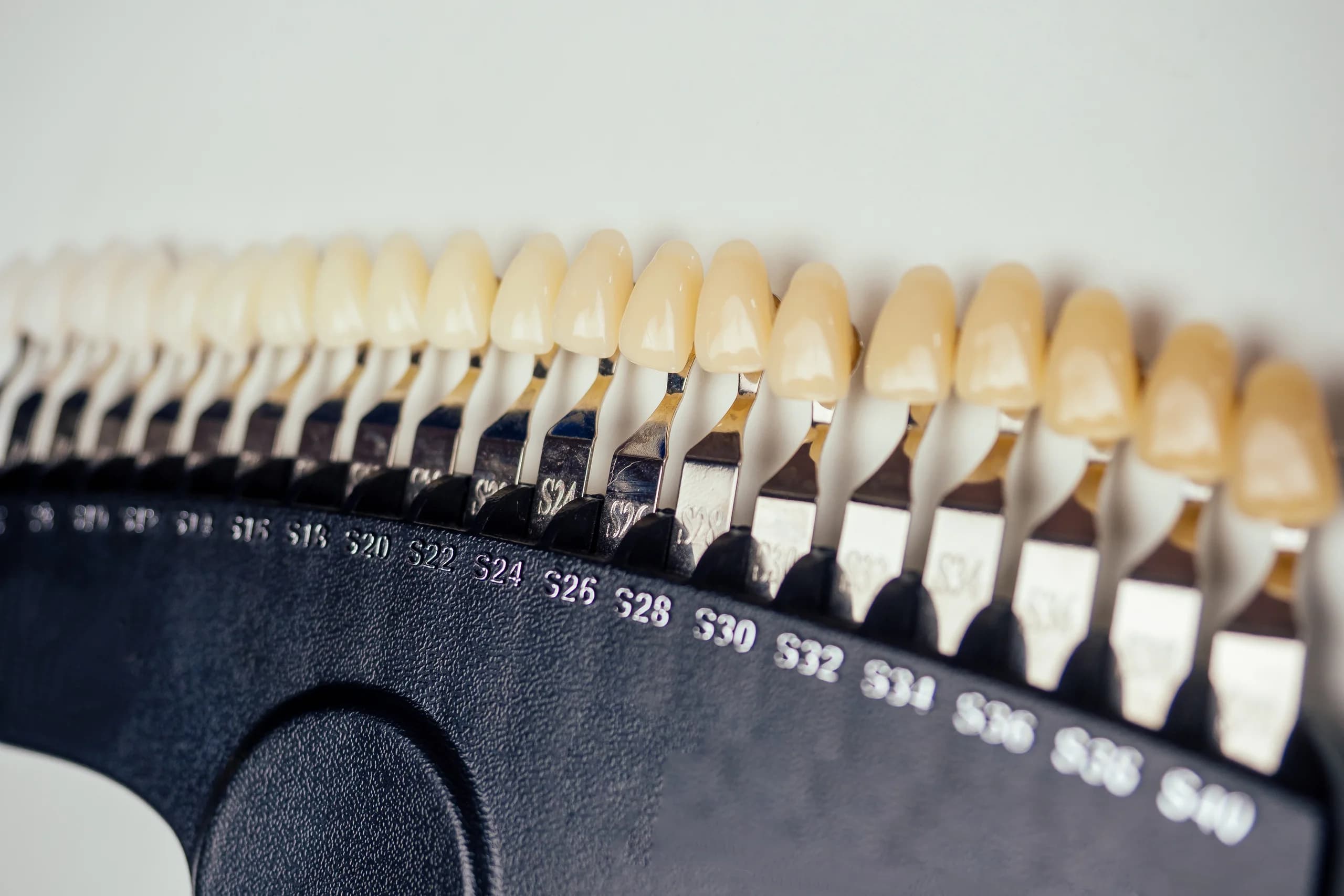
E-Max blocks are shaped with computer-controlled precision in CAD/CAM milling units, ensuring an accurate marginal fit down to fractions of a millimetre. Digital spectrophotometers or professional ceramic shade guides (such as VITA Classical or 3D-Master) are used for colour matching. During laboratory finishing, layered characterisation techniques are applied to give the veneer a natural translucency and depth similar to real enamel; technicians add fine brushed shading to mimic the way light naturally plays across enamel.
Digital occlusion analysis also allows the bite relationship to be checked with millimetre precision, ensuring the functional fit needed for long-term durability. High-performance resin cements used during bonding create a chemical bond between the veneer and the tooth surface, improving both durability and marginal seal. In the laboratory, high-temperature crystallisation ovens give the lithium disilicate its final mechanical and optical properties; before this step, the material is in a more workable intermediate form, and after firing it reaches its final strength and colour. This two-stage manufacturing approach makes it possible to achieve both precise shaping and high durability. Our digital shade-recording systems share photos and data with the laboratory in real time, ensuring the technician has accurate colour and characterisation information even before the patient leaves the clinic.
Translucency & Colour Depth
Layered characterisation with IPS e.max
Opal effects
Natural opalescence simulation at incisal edges.
Dentin shades
Warm-to-cool transitions in body and cervical zones.
Minimal prep
Thin veneers preserving maximum enamel.
How Is It Performed?
- 1
Digital examination and planning:
An intraoral scan, photographs and X-rays (if needed) are used to assess your teeth, gums and bite relationship; digital smile design software simulates the expected result.
- 2
Shade and shape selection:
Your veneer colour is determined together with you, using a professional shade guide based on your natural tooth colour, skin tone and preferences, with the option to go slightly whiter or keep a more natural tone.
- 3
Tooth preparation:
Under local anaesthesia, the necessary amount of enamel is carefully prepared according to the chosen veneer type; minimally invasive techniques are prioritised where suitable. The tooth's natural contour is reshaped to make room for the ideal veneer thickness.
- 4
Digital or conventional impressions:
Impressions of the prepared teeth are taken and sent to the laboratory or CAD/CAM system for fabrication; digital impressions offer a more comfortable experience and reduce the margin for error compared to traditional impression material.
Disadvantages
Lower fracture resistance than zirconia:
May have limited use on back teeth for patients with heavy bite forces or bruxism; your dentist may recommend an alternative material in such cases.
Not preferred for extensive bridges:
For multi-unit fixed bridges, zirconia is generally considered structurally safer; E-Max/Empress is usually reserved for single crowns and short-span bridges.
Limited reversibility:
A degree of natural tooth structure is removed for the veneer, making the process largely permanent — which is why it's important to weigh all alternatives before deciding.
Requires maintenance:
Long-term durability depends on regular brushing, flossing and periodic dental check-ups; neglected oral hygiene can shorten the veneer's lifespan and increase the risk of decay at the margin.
May require a night guard:
Patients with teeth grinding habits may be advised to wear a protective night guard, which involves an adjustment period.
Cost:
Requires a higher upfront investment compared to a composite filling, though it is generally considered more economical long-term given its durability and aesthetic outcome.
Your dentist will explain the advantages and limitations specific to your case during your initial assessment, helping you form realistic expectations.
How Many Days Does It Take?
A standard E-Max/Empress veneer case is typically completed within 4 to 6 days across 2 clinic visits: preparation and impressions on the first day, followed by permanent placement a few days later. Single-tooth cases can be even quicker, while extensive aesthetic cases involving multiple teeth may require additional planning days.
If additional treatment is needed (such as gum therapy, root canal treatment, or colour stabilisation prior to whitening), the timeline may be extended. Some patients choose to combine E-Max veneers with other treatments (implants, teeth whitening) to complete a comprehensive smile renewal programme in a single trip; in such cases, the total stay may extend to 7-10 days. The exact timeline is confirmed after a preliminary assessment based on the photos and X-rays you share with us, and communicated in advance to help you plan your travel.
Treatment Process
Your treatment journey in Alanya begins with a VIP airport transfer from Antalya Airport (AYT). On your first clinic day, a comprehensive examination, digital scan and smile design simulation take place; tooth preparation and impressions are typically completed the same day. Laboratory fabrication and characterisation of the veneers usually takes 2-4 days.
During this time, you can relax at your arranged hotel and explore Alanya's historic castle, Damlataş Cave, Cleopatra Beach, or its scenic coastline. Many of our patients treat this waiting period as a mini holiday, enjoying the sea, sunshine and historic sites, which transforms what could be a stressful clinical visit into a relaxed travel experience. Once your veneers are ready, your final clinic visit completes the permanent bonding and final check. Throughout the process, your patient coordinator stays in contact with you, organises your appointments, and arranges interpreter support if needed. A VIP transfer is also arranged for your return flight, so the entire process involves minimal logistical burden on your part.
Recovery Process
Mild sensitivity to hot or cold foods and a temporary tightness in the gums during the first 24-48 hours are considered normal and usually subside within a few days. Recommendations for the recovery period include:
- Avoiding very hot or very cold food and drinks in the first few days,
- Avoiding hard or sticky foods (ice, hard nuts, chewing gum) for a short period,
- Using prescribed mouthwash and mild pain relief if needed,
- Continuing regular brushing, flossing and interdental brush use as recommended,
- Wearing a protective night guard consistently if you have a history of bruxism,
- Avoiding biting hard objects (pens, fingernails, nutshells) with your front teeth during the first week,
- Attending a dental check-up and professional cleaning every six months.
Follow-up support continues through our digital communication channels after you return home, and our team remains available to answer any questions or review photos remotely. This follow-up service helps you quickly resolve any minor questions that arise once you're back in your home country.
Overall, the adjustment period is quite short; most patients begin to feel their veneers as if they were their own natural teeth within a week. Any slight sense of "unfamiliarity" in speech or chewing during the first few days quickly fades as the tongue and cheek muscles adapt to the new tooth contours.
Risks
Known risks associated with E-Max/Empress veneers include temporary sensitivity, rare cases of chipping or debonding, and long-term micro-fractures related to excessive chewing forces. In cases where tooth preparation needs to be performed close to the tooth nerve (pulp), temporary or, very rarely, permanent sensitivity can develop. These risks are significantly reduced through proper case selection, precise laboratory fabrication and regular maintenance. For patients with risk factors such as bruxism, a protective night guard further reduces this risk.
In addition, micro-leakage at the veneer margin over time can increase the risk of decay beneath the restoration, which is why regular check-ups and professional cleaning are important. Any issues that arise are addressed under the clinic's treatment guarantee, with repair or replacement initiated as needed. A definitive risk assessment is provided individually after a clinical examination, and this content does not constitute medical advice; we recommend a detailed discussion with your dentist before starting treatment.
Another rare occurrence is an unexpected bite discrepancy felt after the veneer is placed; this is usually easily resolved with a small polishing adjustment during a follow-up visit. In theory, new decay could develop in the natural tooth beneath the veneer over the long term, but this risk can be minimised through regular brushing, flossing and annual dental check-ups. Smoking and excessive consumption of acidic foods or drinks can shorten the lifespan of the bonding layer at the veneer margin, so reducing such habits is generally advisable.
Why Choose Us?
A dental team experienced with international patients, actively using digital smile design and CAD/CAM technologies,
A transparent, written treatment plan with clearly stated guarantee coverage — no surprise additional charges,
VIP airport transfer and hotel accommodation arrangements,
24/7 patient coordinator and interpreter support before, during and after treatment,
Accredited partner clinics operating under Turkey's Ministry of Health International Health Tourism Authorization Certificate,
Digital follow-up support after treatment, with remote assessment available when needed,
Partner laboratories with technicians experienced in advanced layered characterisation techniques,
A convenient, centrally located clinic close to the airport, set within a relaxing holiday destination.
Most of our patients tell us that staying in contact with a single coordinator from the first consultation through to treatment completion helps them feel secure at every stage. This approach is especially reassuring for patients travelling abroad for health tourism for the first time.
Price Overview
From
from €280
Varies by number of teeth, treated area (front/back) and case complexity.
Treatments
Frequently Asked Questions

Free initial assessment
Let's build your treatment plan together after a clinical assessment.
Free Consultation WhatsApp