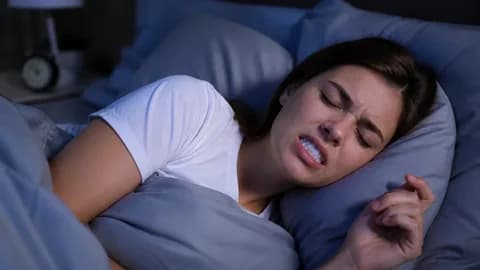
If you wake up with a tired jaw, aching temples and sensitive teeth — yet you were unaware of anything all night — you are describing a typical pattern. If you went to bed with your partner, the grinding sound heard through the night is a familiar scenario too. These signs are typical indicators of sleep bruxism (night-time teeth clenching and grinding).
Sleep bruxism is involuntary jaw muscle activity that happens without you noticing while awake. Unlike daytime teeth clenching, conscious control is offline; the person usually does not know the behaviour is occurring and only becomes aware through morning symptoms or a warning from someone nearby. This article explains why teeth grinding occurs during sleep, which factors are associated with it, and its long-term effects on teeth and jaw health for informational purposes. A definitive diagnosis can only be made through a dental examination.
What Is Sleep Bruxism?
Bruxism is the tendency to clench or grind teeth involuntarily. It has two main forms:
- Awake bruxism: Occurs during the day, usually linked to stress, concentration or habit.
- Sleep bruxism: Occurs during sleep, in REM and non-REM stages; the person is unconscious.
Sleep bruxism manifests through repeated contractions of the chewing muscles (especially the masseter and temporalis) during sleep. These contractions can last seconds and may repeat hundreds of times in one night. Biting force can reach several times normal chewing force — placing serious load on tooth enamel and temporomandibular joint structures.
How Common Is It?
Population studies suggest sleep bruxism is found in roughly 8–31% of adults; in children the rate is higher and in most cases it decreases spontaneously during adolescence. However, bruxism that continues into adulthood tends to become chronic. Although frequency is similar in men and women, women may seek help for symptoms slightly more often.
Why Does It Happen During Sleep? Brain and Nervous System
Sleep bruxism has no single cause; it is considered a multifactorial condition. The answer to why it appears during sleep lies in the brain–jaw muscle connection.
Sleep Stages and Muscle Activation
Sleep consists of REM (rapid eye movement) and non-REM stages. Research shows bruxism events can occur in both stages; however, they become more frequent especially during transitions from light to deep sleep and during sleep fragmentation. Because conscious control mechanisms are offline during sleep, excessive activation of jaw muscles cannot be prevented.
Central Nervous System Hypothesis
Current scientific view supports that sleep bruxism is largely a central nervous system–driven condition. Abnormal stimulation of chewing centres in the brainstem during sleep leads to muscle contractions. This means the situation cannot be simplified to "you grind because you are stressed" — neurological, genetic and environmental factors all play a role together.
Comparison with Awake Bruxism
Awake bruxism is usually a conscious or semi-conscious behaviour; the person can often notice they are clenching and learn to relax. In sleep bruxism, this control mechanism is offline. The two forms are not independent; the same person may have both night and day bruxism. Treatment planning should account for both forms.
Possible Causes and Triggers
1. Stress and Anxiety
Daytime psychological tension is one of the most frequently reported triggers of sleep bruxism. Work pressure, anxiety disorders, depression or life changes can disrupt sleep quality and contribute to jaw muscles staying tense through the night. Stress management alone may not solve the problem; however, it can reduce symptom severity for many patients.
2. Sleep Disorders and Sleep Apnoea
Obstructive sleep apnoea (OSA) has a strong association with sleep bruxism. When the airway is temporarily blocked, the brain may reflexively contract jaw muscles to open the airway; this can appear as teeth clenching and grinding. If snoring, daytime excessive sleepiness and a sense of breath stopping accompany symptoms, sleep medicine evaluation should be considered.
3. Genetic Predisposition
If there is a family history of bruxism, an individual's risk of developing sleep bruxism increases. Twin studies show the hereditary component of the condition is significant. Genetic factors alone may not be sufficient, but combined with other triggers they raise risk.
4. Medications and Substances
Some medications (especially SSRI antidepressants) have been associated with bruxism. Alcohol consumption can disrupt sleep architecture and increase bruxism events. Caffeine and nicotine can also indirectly act as triggers by harming sleep quality. Medication changes should only be made on physician advice.
5. Bite Disorders (Malocclusion)
Misalignment in how teeth meet can lead chewing muscles to work excessively for compensation. However, bite disorder is not the primary cause in every bruxism case; many patients have normal occlusion yet bruxism continues. Clinical assessment clarifies the role of occlusion.
6. Lifestyle Factors
Irregular sleep times, insufficient sleep, heavy evening meals and high-stress work environments can increase bruxism risk. Paying attention to sleep hygiene — regular bedtime, no screens in the bedroom, limiting caffeine and alcohol in the evening — is a supportive step.
Sleep Bruxism in Children
Teeth grinding is quite common in children; it is often seen during the primary dentition period or when permanent teeth erupt. In most children it decreases on its own with growth. However, if there is severe wear, jaw pain or marked disruption of sleep quality, paediatric dental assessment is recommended. Night guard use in children follows different criteria than in adults; splints should not be applied without dentist recommendation.
Symptoms: How Is It Recognised?
Sleep bruxism is often not noticed by the person themselves but through symptoms or those around them:
- Morning jaw pain or fatigue — from chewing muscles working excessively overnight
- Temple or headache — from continuous contraction of the temporalis muscle
- Tooth sensitivity — from enamel wear or micro-cracks
- Partner hearing grinding sounds — the most common way it is detected
- Flattening on tooth surfaces — signs of long-term wear
- Clicking or locking sensation in the temporomandibular joint (TMJ)
- Pain near the ear — referred pain from TMJ discomfort
If one or more of these symptoms bothers you, we recommend seeing your dentist.
How Is Diagnosis Made?
Sleep bruxism diagnosis is mostly based on clinical findings and patient history. The dentist examines wear patterns on tooth surfaces, sensitivity of jaw muscles and occlusion. Polysomnography (sleep test) or home sleep recording may be recommended if needed — especially when sleep apnoea is suspected. Video recordings at home can support diagnosis but are not sufficient on their own.
Long-Term Effects on Teeth and Jaw
Sleep bruxism can continue for years without being noticed. Damage accumulated during this time can be significant:
Enamel Wear
Forces much higher than normal chewing wear down the enamel layer. Tooth length shortens, incisal edges flatten and sensitivity increases. When wear progresses, restorative treatment (fillings, crowns) may be needed.
Crack and Fracture Risk
Repeated biting forces can cause cracks, especially in teeth with large fillings or root canal treatment. Aesthetic crowns and veneers are also exposed to excessive load; therefore bruxism assessment before aesthetic treatment is critically important.
Temporomandibular Joint (TMJ) Problems
The temporomandibular joint is where the lower jaw connects to the skull. Long-term bruxism can cause wear in joint cartilage, disc displacement and muscle spasms. Sound, pain or limited movement when opening and closing the mouth may be part of this picture.
Gum and Bone Support
Excessive lateral (sideways) forces can contribute to gum recession and weakening of supporting tissues. This effect becomes more pronounced when combined with periodontal disease.
Warning for Those Planning Aesthetic Treatment
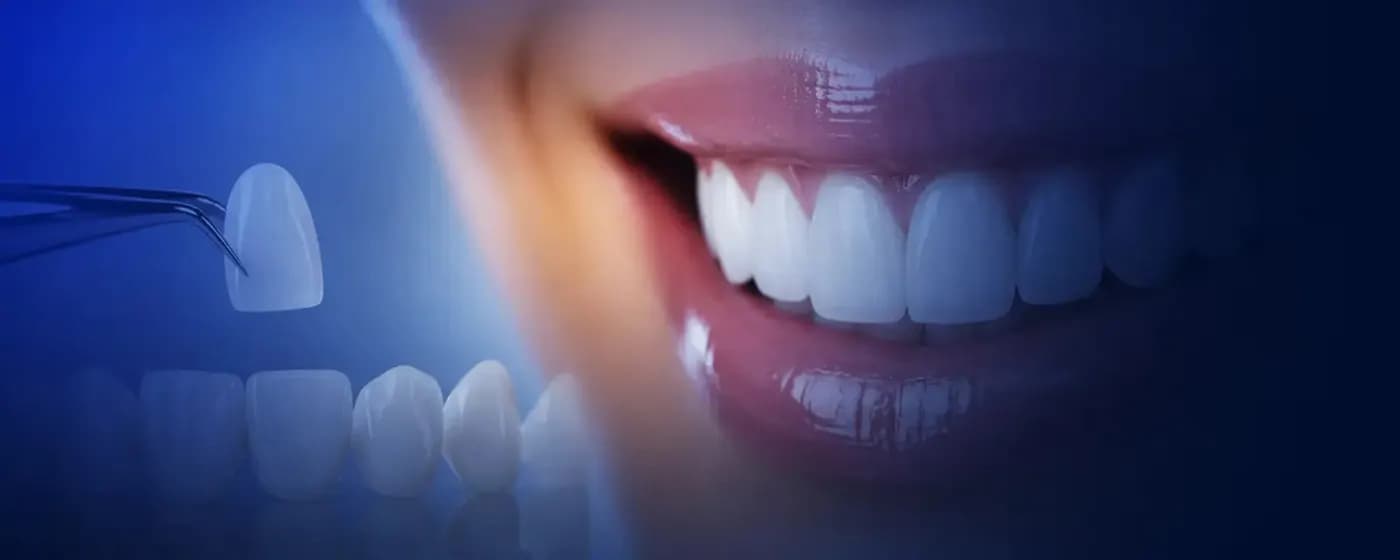
When planning aesthetic restorations such as Hollywood Smile, zirconia crowns or veneers, active bruxism must be evaluated. Otherwise treatments done with high expectations may experience fracture, colour change or debonding in a short time. Moving to the aesthetic protocol after bruxism is under control both extends result longevity and reduces unnecessary revision risk. We covered the relationship between bruxism and crowns in detail in Who is not suitable for zirconia crowns?.
What Should You Do?
Sleep bruxism may not resolve on its own, and early intervention helps protect teeth and jaw health. The assessment process usually includes:
- Clinical examination — evaluation of tooth wear, cracks, occlusion and temporomandibular joint
- Medical history — stress level, sleep habits, medication use, family history
- Night guard (splint) — custom-made splint aims to distribute force on teeth
- Bite analysis — selective adjustment or orthodontic evaluation if needed
- Sleep medicine referral — if sleep apnoea is suspected
Treatment options may include stress management, physiotherapy exercises and restorative repair if needed. For detailed treatment approaches, see our What is bruxism? Teeth grinding treatment guide.
This content does not provide a diagnosis or guarantee recovery. If you have symptoms, a dental examination is recommended.
Practical Tips for Prevention
It may not always be possible to prevent bruxism completely, but steps can be taken to reduce risk:
- Establish a regular sleep routine; go to bed and wake at the same time each day.
- In the evening, avoid caffeine, alcohol and heavy meals.
- Add stress management techniques (breathing exercises, meditation, regular sport) to daily routine.
- If you have a daytime clenching habit, learn to consciously relax the jaw.
- Do not skip dental check-ups; early wear signs can be detected at examination.
- If planning aesthetic treatment, make bruxism assessment a priority.
- Ready-made bite guards from a pharmacy do not replace a custom night guard; incorrect use can disturb jaw position.
When Is Specialist Support Needed?
Most bruxism cases can be managed by a primary-care dentist. However, specialist opinion may be considered in these situations:
- Serious limitation when opening and closing the mouth, or locking in the joint
- Severe, persistent head or facial pain — at a level affecting daily life
- Sleep apnoea symptoms — snoring, breath stopping, daytime excessive sleepiness
- Progressive tooth wear despite a night guard
- In children — severe wear or developmental concern
In these scenarios the dentist may refer to oral and maxillofacial surgery, physiotherapy or a sleep medicine specialist.
What You Should Know
- Sleep bruxism happens unconsciously; it is noticed through morning symptoms or partner alert.
- There is no single cause; stress, sleep apnoea, genetics, medications and bite disorders may all play a role.
- Biting force produced is much higher than normal chewing.
- Long term, enamel wear, cracks, TMJ discomfort and restoration damage may occur.
- Night guard, clinical assessment and sleep medicine referral if needed may be part of the treatment plan.
Conclusion
Grinding teeth during sleep is common but often recognised late. Causes are multifactorial; although stress and sleep disorders stand out, genetic and neurological components are also important. Early assessment is critical to protect tooth enamel, the temporomandibular joint and existing restorations. If symptoms bother you, see your dentist; you can request a free initial consultation for personal assessment and treatment planning.