

Other Treatments
Tooth Extraction
Safe extraction of teeth that cannot be saved, performed with the least traumatic method and with follow-up treatment planned in advance.
- Digital surgical planning
- Personalised treatment protocol
- Controlled recovery pathway
- Material
- Clinical standard
- Duration
- 1 day (single session, 15-45 minutes)
- Anesthesia
- Local anaesthesia
- Recovery
- 3-7 days
What Is It?
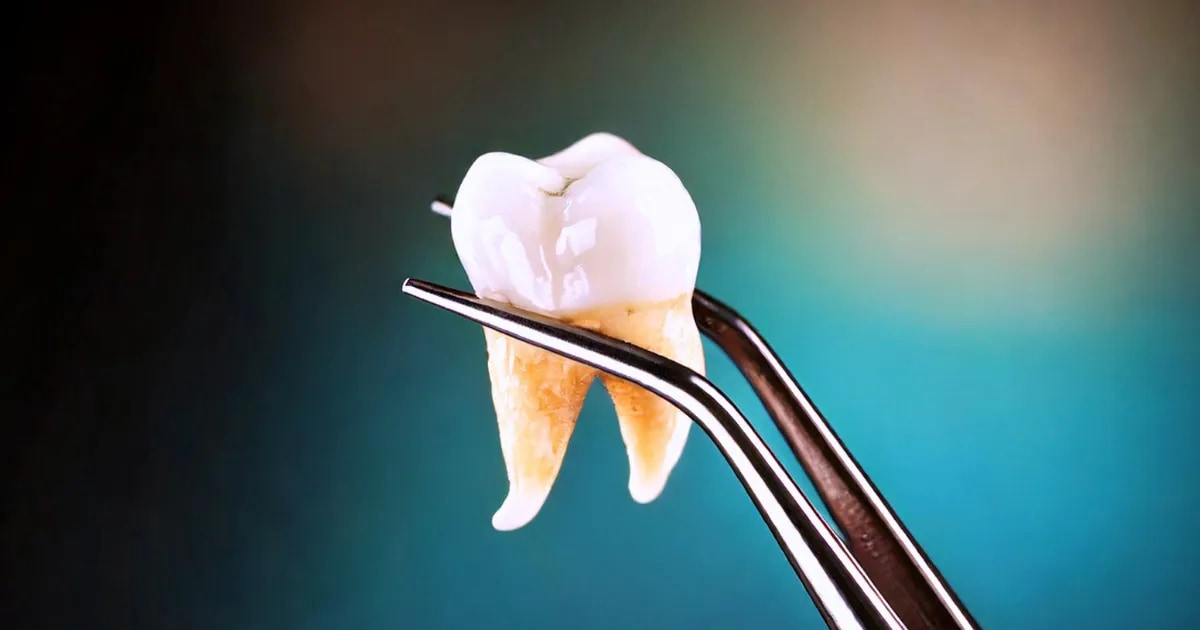
Tooth extraction is the procedure of removing a tooth that cannot be saved, or that poses a risk to overall oral health, from the jawbone under local anaesthesia in a controlled manner. In modern dentistry, extraction is considered a last resort wherever possible; dentists first evaluate options aimed at saving the tooth (root canal treatment, a crown, gum therapy). However, in some cases, the tooth's structural or biological condition makes these options impossible, and extraction becomes necessary both to protect overall oral health and to eliminate a source of pain or infection. This assessment is shaped not only by the tooth itself, but also by the patient's overall oral health goals and long-term expectations.
Tooth extraction falls into two main categories: simple extraction and surgical extraction. A simple extraction is performed on teeth that are visible in the mouth and can be removed in a single piece; it involves gently loosening the tooth with forceps (a specialised extraction instrument) and removing it from the socket. A surgical extraction, on the other hand, is used for more complex cases — such as fractured teeth, teeth impacted beneath the gum, teeth with complex root structures, or wisdom teeth — and typically involves additional steps such as a small incision in the gum tissue and, if necessary, removing the tooth in sections. Because wisdom tooth extraction has its own distinct clinical characteristics, we cover this topic in more detail on a separate page.
The most common reasons leading to tooth extraction include decay too deep to treat, teeth that have lost bone support due to advanced gum disease (periodontitis), fractured or cracked root structures, impacted or partially impacted wisdom teeth, the need to create space before orthodontic treatment, and, in some cases, preparatory extractions before denture or implant treatment. At our clinic in Alanya, we always thoroughly assess whether a tooth can be saved before recommending extraction; the decision is made with the patient's long-term oral health in mind.
Although tooth extraction is one of the most established procedures in dentistry, it is now largely supported by advanced techniques and technology. Digital imaging allows dentists to assess a tooth's root structure, surrounding bone density, and nearby anatomical structures (such as the sinus cavity or nerve canal) with millimetre precision before extraction. This advance planning shortens the procedure, reduces the risk of complications, and significantly improves patient comfort — while also minimising unexpected findings during the procedure for a more predictable process. In addition, modern "atraumatic extraction" techniques preserve the surrounding bone structure as much as possible, helping maintain bone volume for cases where an implant is planned later.
Many patients feel anxious when they hear the phrase "tooth extraction," recalling painful or traumatic experiences from years past. However, thanks to modern local anaesthesia techniques, digital planning, and experienced clinical practice, tooth extraction today is largely a comfortable and predictable procedure. At our clinic, anxious patients receive detailed information before the procedure, and the entire process is explained step by step — this helps improve both physical and psychological comfort. In our experience, the vast majority of patients report feeling "much more comfortable than expected" afterwards, which is an important source of reassurance for patients who feel anxious about dental treatment and helps them move forward with treatment without unnecessary delay.
Advantages
Eliminates a source of pain and infection:
An unsalvageable tooth can cause chronic pain, recurring infection, or abscess formation; extraction resolves this issue permanently.
Protects neighbouring tissues:
Removing an infected or damaged tooth prevents the infection from spreading to neighbouring teeth, bone, or soft tissue.
Prepares the ground for further treatment:
Extraction can be the first and necessary step in a more comprehensive treatment plan, such as an implant, bridge, or orthodontic treatment.
A fast and effective solution:
The procedure is usually completed in a single clinic session (15-45 minutes).
Improves overall oral health:
Removing severely loose teeth due to periodontitis helps halt the inflammatory process in the jawbone.
Minimally invasive with modern techniques:
Piezosurgery and atraumatic extraction techniques preserve bone tissue, making the procedure as comfortable as possible.
Indirectly protects other teeth:
Once the source of infection is removed, the overall bacterial load in the mouth decreases, which positively affects the health of neighbouring teeth and gums.
Disadvantages
In the interest of transparency, we also want to share the limitations of this procedure:
Permanent tooth loss:
An extracted tooth cannot be brought back; extraction should always be considered a last resort.
Risk of bone loss:
After a tooth is extracted, the jawbone in that area can lose volume over time (resorption); this may create a need for a bone graft if an implant is planned in the future.
Risk of neighbouring teeth shifting:
If the gap is left unfilled for a long time, neighbouring teeth may gradually shift into the space, and the opposing tooth may over-erupt.
Temporary discomfort:
Swelling, sensitivity and mild pain may last a few days after the procedure.
Surgical extractions may involve a longer recovery:
Recovery from impacted tooth extractions tends to take longer and require more care compared with simple extractions.
Additional treatment cost:
Filling the gap with an implant, bridge, or denture requires additional budget planning beyond the extraction itself.
Your dentist will openly discuss these disadvantages with you when recommending extraction, and will present a plan for how the gap will be filled. Our goal is not simply to remove the problematic tooth, but to offer a holistic treatment approach that protects your long-term oral health and smile; every extraction decision is considered as part of a broader treatment plan.
Risks
With proper planning and an experienced dentist, tooth extraction is generally a safe procedure, but there are some risks worth understanding. The best-known complication is called "dry socket" (alveolar osteitis), where the blood clot dislodges prematurely, leading to a delayed, painful healing process. Rarely, infection, excessive bleeding, or mild damage to neighbouring teeth or tissue may occur. For lower back teeth, proximity to the nerve canal carries a risk of temporary — or rarely permanent — sensory changes (numbness); this risk is minimised through pre-procedure digital imaging, and the possibility is clearly explained to the patient beforehand; an experienced dentist identifies such anatomical relationships in advance and selects the most appropriate extraction technique. For upper back teeth, proximity to the sinus cavity can rarely create a small connection between the sinus and the mouth (oro-antral fistula); this can usually be closed with a simple additional procedure, and experienced clinical planning greatly reduces this risk. A definitive risk assessment is provided individually after a clinical examination and imaging, and this content does not constitute medical advice.
The risk of dry socket is higher particularly among smokers, women using oral contraceptives, and in cases where aftercare instructions are not followed. To minimise this risk, it is important to fully follow your dentist's instructions before and after the procedure. If dry socket does develop, targeted care at the clinic can quickly bring the pain under control, which is why we recommend contacting us promptly if you notice any suspicious symptoms — even after you've returned home, you can consult your dentist through our digital communication channels and request a referral to a local dentist if needed.
How Is It Performed?
- 1
Examination and imaging:
Digital X-rays (panoramic or CBCT if needed) are used to assess the tooth's root structure, surrounding bone, and nearby anatomical structures (sinus cavity, nerve canal).
- 2
Administering anaesthesia:
Local anaesthesia is applied around the tooth to be extracted; you will not feel pain during the procedure, only a sensation of pressure.
- 3
Loosening the tooth:
For simple extractions, the tooth is gently loosened in its socket using a specialised instrument (elevator).
- 4
Removal:
Forceps are used to remove the tooth from the socket with controlled movements. For surgical extractions, a small incision is made in the gum tissue, and the tooth may be removed in sections if necessary.
Technologies Used
Before tooth extraction, digital panoramic X-rays — and CBCT (three-dimensional tomography) imaging where indicated — are used to assess the tooth's root structure, surrounding bone tissue, and nearby anatomical structures (the sinus cavity in the upper jaw, the nerve canal in the lower jaw). This imaging particularly enhances the safety and predictability of the procedure for impacted teeth or those with complex root structures. Digital panoramic X-rays give the dentist a broad overview of all teeth in both jaws and their surrounding structures in a single image — particularly valuable for cases involving multiple extractions or a general oral assessment. CBCT imaging provides a three-dimensional, cross-sectional view, allowing a much more precise assessment of impacted teeth's root structure and proximity to the nerve canal. These technologies make pre-procedure risks far more predictable.
Piezosurgery devices may be used for surgical extractions; this technology uses high-frequency ultrasonic vibrations to cut only bone tissue, reducing the risk of damage to soft tissue (blood vessels, nerves). This translates to a less traumatic procedure and faster recovery, particularly in complex cases; compared with traditional hand instruments, piezosurgery creates cleaner cut surfaces in bone tissue, which can also positively affect the healing process. Biocompatible haemostatic agents may be used to support bleeding control and healing. Low-level laser therapy (LLLT) support may also be offered in suitable cases to reduce post-procedure pain and swelling.
How Many Days Does It Take?
A standard tooth extraction is completed in a single day, within one clinic session (15-45 minutes). It does not require additional overnight stays or multiple visits. However, if follow-up treatment such as an implant, bridge, or denture is planned after extraction, the overall timeline extends according to the schedule required by that treatment — this will be explained in detail during your free consultation. For surgical extractions requiring stitches, a follow-up appointment (in person or digitally) may be scheduled 7-10 days later for stitch removal.
Treatment Process
At our clinic in Alanya, tooth extraction for our international patients is typically planned as a single-day appointment that fits easily into your holiday schedule. Based on the photos and X-rays you share during your free consultation, a preliminary assessment is prepared, and VIP transfer to our clinic is arranged. The examination, imaging and extraction procedure can be completed on the same day. For cases where an implant is planned after extraction, your dentist will offer a personalised timeline; in some cases, an implant can be placed in the same session as the extraction (immediate implant), while in others, a period of bone healing must be allowed first. A follow-up appointment after extraction is typically scheduled 7-10 days later (if stitches need to be removed) or handled through our digital communication channels.
For patients who wish to combine tooth extraction with other treatments (root canal treatment, fillings, comprehensive cleaning), a comprehensive treatment schedule can be arranged to suit your travel itinerary. For example, during a week-long trip, the examination and any necessary extractions could be completed on the first day, other dental treatments planned over the following days, and the final days of your holiday spent resting while your recovery completes. Your patient coordinator can communicate with you in English, German and Russian in addition to Turkish, staying by your side throughout the process.
Recovery Process
Recovery after tooth extraction varies depending on the complexity of the procedure, but generally improves significantly within 3-7 days. Points to keep in mind include:
Applying ice to the area during the first 24 hours after the procedure significantly reduces swelling,
Avoiding drinking through a straw, spitting, and rinsing vigorously to prevent the blood clot from dislodging — critical for avoiding "dry socket,"
Strictly avoiding smoking and alcohol in the first 24 hours, as these can seriously delay healing,
Favouring soft, lukewarm foods (yoghurt, purées, soup) on the first day, gradually returning to a normal diet over the following days,
Taking prescribed pain relief and antibiotics (if needed) as instructed,
Applying a cold compress to the cheek from outside the treated area; avoiding heat compresses,
Rinsing gently with warm salt water after 24 hours (with your dentist's approval),
Keeping your head slightly elevated while lying down, which can help reduce swelling,
Avoiding intense physical activity and exercise during the first week, as increased blood pressure can trigger bleeding,
Avoiding direct contact with the extraction site while brushing, while continuing to clean your other teeth normally.
Severe, worsening pain, fever, or a bad odour may indicate dry socket or infection; if you notice these symptoms, contact our clinic right away. The blood clot that forms in the first 24 hours of healing is considered the most critical element of recovery; it protects the socket from infection and forms the foundation for new tissue growth. For this reason, rinsing, spitting, smoking, and drinking through a straw must be strictly avoided during this initial 24-hour period — each of these behaviours can dislodge the clot prematurely and lead to the painful complication known as dry socket. By the end of the first week, the gum tissue has usually closed superficially; however, full bone healing can take 2-3 months. This timeframe directly affects the schedule your dentist will offer if an implant is planned after extraction. In some cases, bone graft material may be placed into the socket at the time of extraction (a "socket preservation" technique) to help maintain bone volume; this is particularly recommended for areas where an implant is planned later, and your dentist will inform you about this during the examination.
Why Choose Us?
A dental team with extensive international patient experience, applying atraumatic extraction techniques,
Detailed advance planning using digital and, where necessary, 3D imaging,
A transparent, written and guaranteed treatment plan,
VIP airport transfer and accommodation arrangements,
The ability to plan follow-up treatments — such as an implant, bridge, or denture — at the same clinic after extraction,
24/7 patient coordinator support throughout and after your treatment,
An accredited clinical environment operating under the Health Tourism Authorization Certificate,
A calm, reassuring communication approach for anxious patients, with additional comfort measures available if needed.
The decision to extract a tooth can sometimes be a difficult one for our patients, particularly in cases where efforts have been made for a long time to save the tooth — it can carry an emotional dimension too. That's why we place great importance on keeping you informed and patiently answering your questions at every stage of the process.
Price Overview
From
from €40
Depends on whether a simple or surgical extraction is needed, and on the tooth's position and root structure.
Treatments
Frequently Asked Questions
Treatments
Related Treatments


Free initial assessment
Let's build your treatment plan together after a clinical assessment.
Free Consultation WhatsApp